
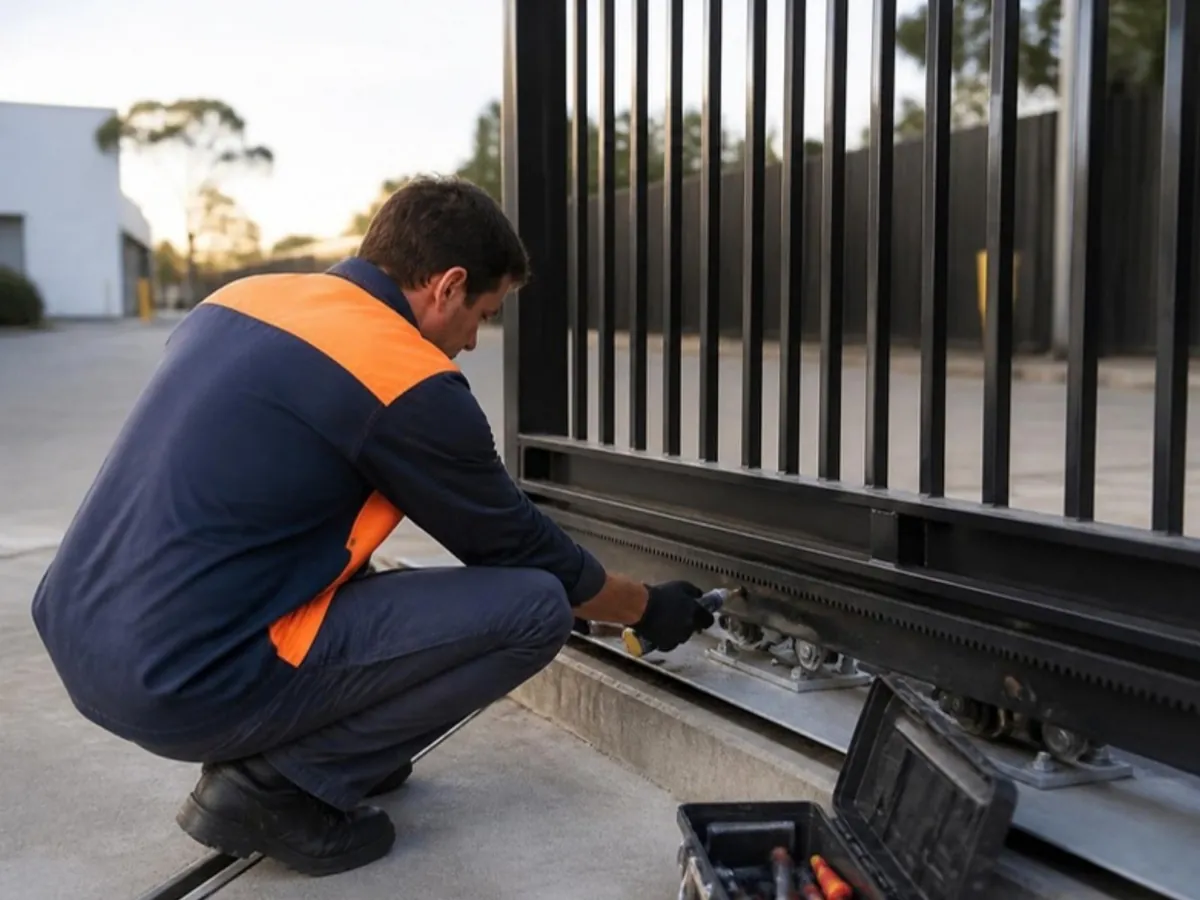
Illustrative image; not a record of a specific service visit.
A gate that still opens can need attention. For a facility manager, the useful starting point is a clear record of the asset, any change in behaviour and who will act on a reported fault. This checklist helps Melbourne commercial sites prepare for a maintenance assessment. It is a planning aid, not a procedure for repairing or certifying a powered gate.
1. Make an asset list before booking
Give each sliding gate, swing gate, boom gate and pedestrian access point a site name or asset number. Note its location, the manufacturer and model if visible without opening equipment, its usual operating hours and who manages access. Include a site contact and any induction or escort requirements. For a portfolio, keep each address and asset list separate so that a fault can be assigned to the correct entrance.
2. Record changes from a safe position
Report new scraping, vibration, unusual noise, repeated reversals, impact damage or a gate that does not follow its normal sequence. Record when the change started and whether it follows rain, a power interruption or a vehicle strike. Existing photos taken from outside the movement area can help the service team prepare. Do not stand in the gate path, enter a trapping area or repeatedly operate faulty equipment to capture a video.
3. Treat a suspect gate as an access risk
If an entrance appears unsafe, keep people clear and follow the site's isolation and access-control arrangements while obtaining competent assistance. Do not bypass a safety device, open a control cabinet or disconnect a drive to get traffic moving. WorkSafe Victoria's published guidance on sliding-gate maintenance emphasises secure support, end stops, controlled manual operation and appropriate instructions during repairs. Those are matters for the service provider to assess.
4. Define what the maintenance visit covers
Ask for an agreed scope covering the gate structure and mechanical components, the drive and controls, the installed safety devices, access equipment and emergency operation where applicable. A working remote alone does not establish that the whole entrance has been assessed. RJL's commercial gate servicing page describes the supported equipment and the records included with a planned visit.
5. Set the interval around the actual site
A quiet staff entrance and a busy logistics gate have different operating demands. Record approximate daily cycles, pedestrian exposure, vehicle types, weather exposure and the consequence of losing access. Use these details with manufacturer instructions and the service provider's assessment to agree the schedule. Do not assume that one interval suits every gate, or that a calendar reminder replaces reporting a new fault.
6. Ask for a report with an owner for each action
A useful maintenance record identifies the asset, visit date, work completed, observed defects and recommended next steps. Ask which findings need immediate attention, which require a repair quotation and which can be planned. Assign a responsible person and a due date to each action. Retain the report with earlier service records so the next assessment can see recurring faults and unresolved recommendations.
A short brief to send the service team
- Site address, entrance names and approximate asset count.
- Gate types, available model details and normal operating hours.
- Fault symptoms, when they started and any known impact or power event.
- Site access, induction, escort and traffic-management requirements.
- Previous service records and outstanding repair recommendations.
- The site contact and who can approve the next step.
Start with the condition of the site
RJL offers a free on-site maintenance report for commercial sites and owners corporations. The published offer has no charge and no requirement to sign a maintenance contract. Send the address, asset list and scope so the team can confirm the next step. For an urgent gate or access fault, call 0400 101 132.
Sources and scope
This research-assisted guide was prepared by RJL Commercial Group. Safety guidance is drawn from WorkSafe Victoria's advice on motorised sliding-gate maintenance. The service brief and reporting checklist are RJL planning guidance, based on its published maintenance service scope. No site inspection, certification or individual risk assessment is implied by this article.
 Chris Alebakis Named Industry Legend at the 2025 Australian Fencing Awards
 Toorak College: Boom gate & access control case study
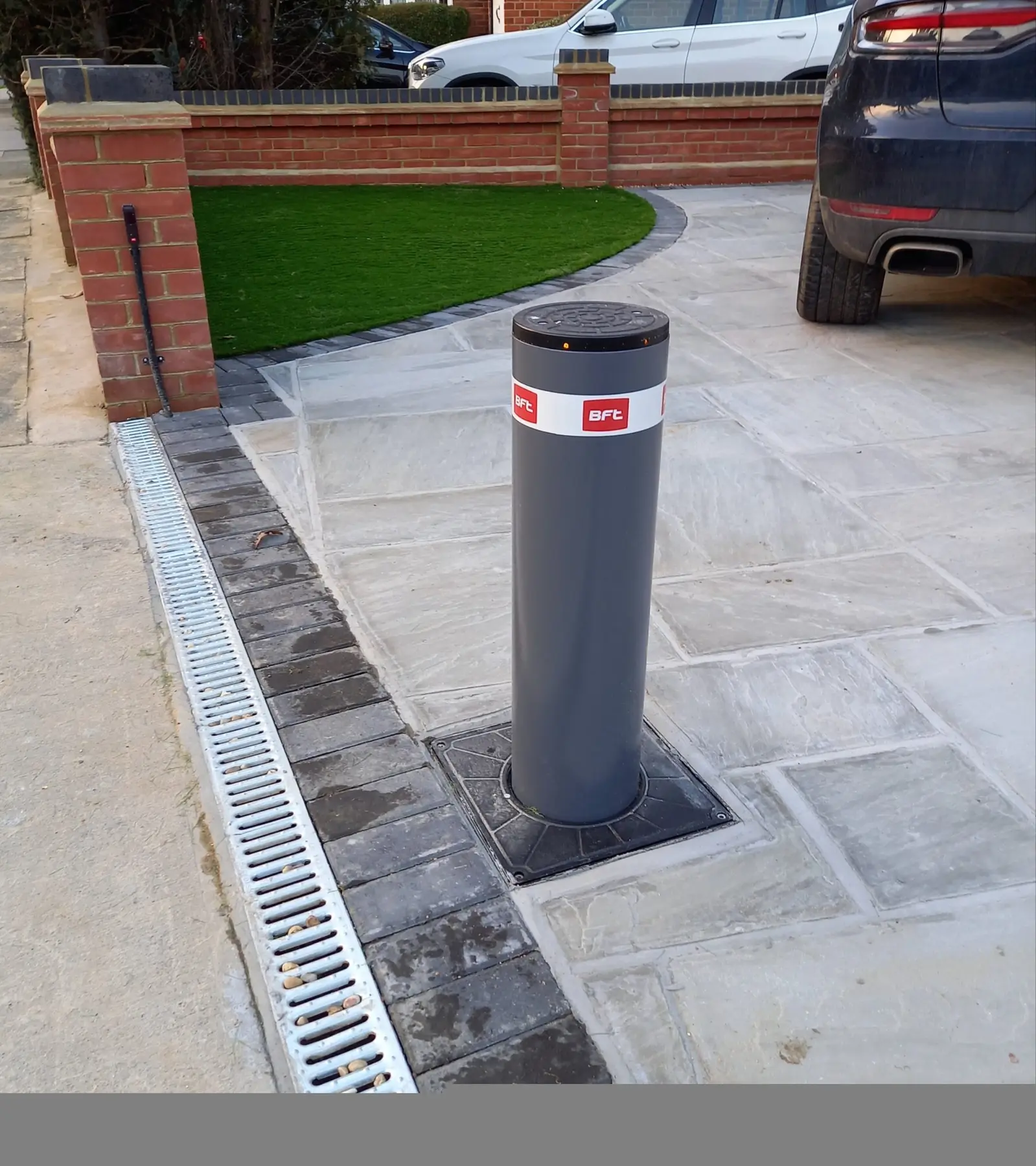 Automatic Bollard Installation: Automated vehicle control case study