
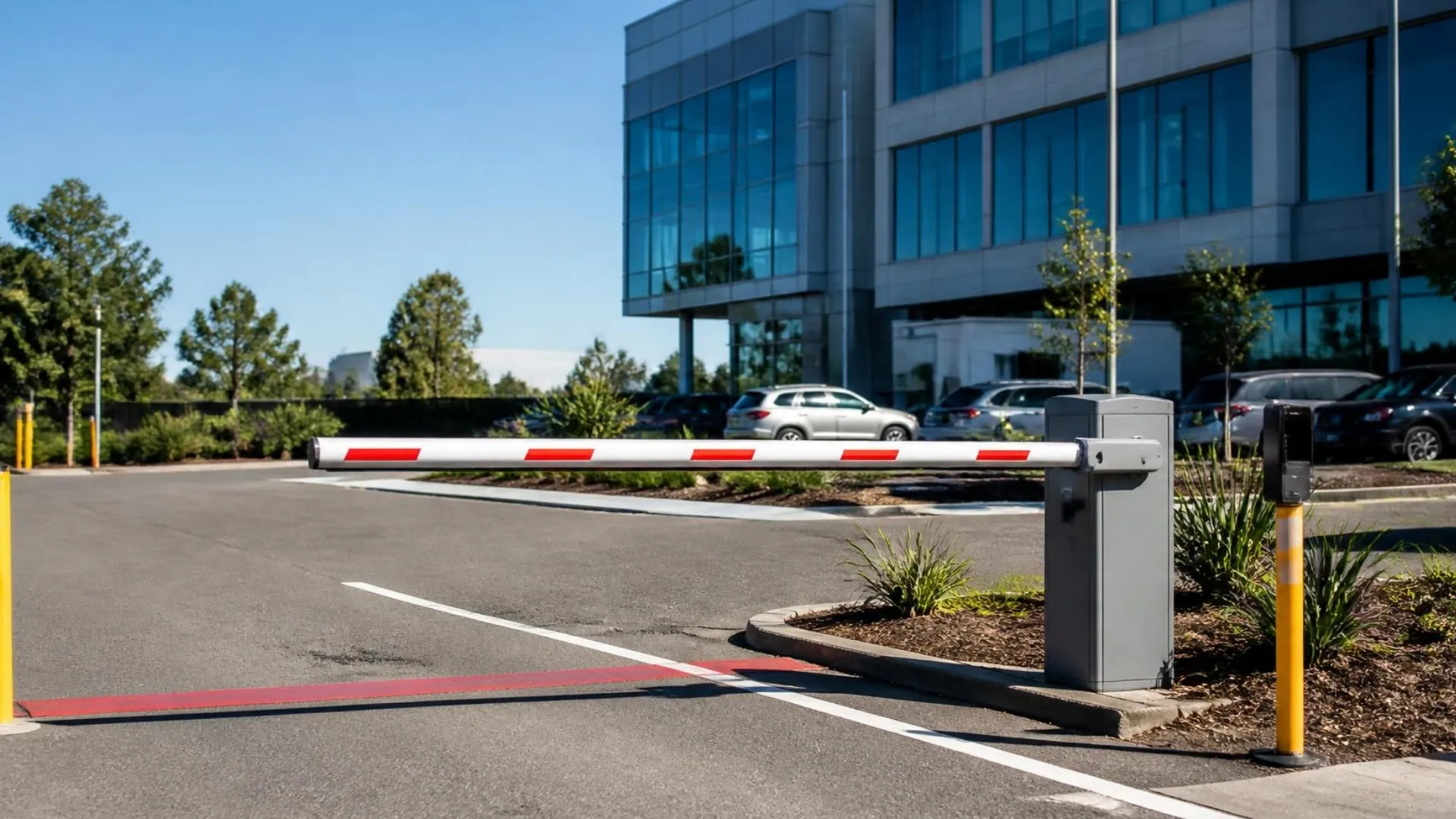
Illustrative boom-gate image from the RJL site. It is a reference image, not a claim about a project discussed in this guide.
A boom gate can control vehicle entry, but the arm is only one part of a safe and workable site entrance. Before choosing an operator, facilities and procurement teams should map how cars, trucks, cyclists and pedestrians actually move through the area. Queue length, visibility, access credentials, after-hours arrivals and power or network outages can all change the right layout.
This is an evergreen planning guide for Victorian commercial and industrial sites. WorkSafe Victoria says safe design should consider foreseeable hazards and recommends separating pedestrian and vehicle accessways where reasonably practicable. Safe Work Australia also identifies traffic flow, barriers, walkways and signs as matters a workplace traffic-management plan may cover. Safe Work Australia publishes national guidance and is not Victoria’s workplace regulator.
1. Map every movement before selecting equipment
Record each vehicle type, its turning path and likely arrival pattern. Include delivery trucks, waste vehicles, contractors, staff, visitors and emergency access. Note the largest vehicle’s height, width and turning needs, plus any place where a queue could obstruct a road, footpath, loading area or internal intersection.
Do the same for people. Trace the walk from parking, public transport and site boundaries to building entrances. WorkSafe’s safe-design guidance specifically points to designated pedestrian accessways and reducing interaction between people, plant and vehicles. A separate pedestrian route may change the best position for the boom, reader pedestal and fencing.
2. Decide what the boom gate is meant to achieve
Write a short operational objective. Examples include controlling staff parking, admitting booked deliveries or stopping unauthorised vehicles from reaching a loading yard. A light barrier arm is a vehicle-control device. It should not be treated as an impact-rated security barrier unless the selected system has independently verified performance for that purpose.
RJL commentary: this distinction helps prevent a specification from trying to solve parking control, perimeter security and hostile-vehicle protection with one product. If higher security is required, review the wider perimeter and the appropriate security-barrier options as a separate design decision.
3. Plan the reader and stopping position
A driver should be able to stop, present a credential and wait without blocking a crossing or exposing a person to moving traffic. Consider whether a car-height reader also works for vans and trucks. If visitors need an intercom, identify who answers it during business hours, after hours and during staff absences.
Safe Work Australia advises workplaces to examine blind spots, poor visibility, vehicle types, loading areas and entry and exit points. Its general guide also describes measures at pedestrian crossings such as warning devices, physical barriers, traffic lights and clear right-of-way procedures. Those controls must be selected for the actual site risk.
4. Separate pedestrians from the vehicle lane
Do not assume pedestrians will wait behind a boom arm. If the shortest route passes through the vehicle lane, people are likely to use it. Review whether fencing, guardrail, bollards, a dedicated pedestrian gate or a relocated walkway can make the intended path obvious and convenient.
WorkSafe’s Victorian guidance says separating pedestrian and vehicle accessways can eliminate dangerous interactions. Where complete separation is not reasonably practicable, the site should consider traffic-management controls that minimise interaction. The appropriate controls depend on the workplace and should be developed with the people affected.
5. Define safe operation and detection
Document how the system should respond when a vehicle stops under the arm, reverses, tailgates or enters from the wrong direction. Record the intended warning lights, signage, detection zones and closing logic. Ask how motorcycles, bicycles and unusually high or long vehicles will be handled. These are functional requirements for the site team and system designer to resolve before commissioning.
6. Write the outage and emergency procedure
Decide what happens during loss of power, communications or access-control service. The procedure should cover authorised manual release, who holds access, how the lane is supervised while controls are unavailable, and how emergency services enter. Avoid leaving this as unwritten knowledge held by one employee or contractor.
7. Set acceptance evidence before ordering
Include the required handover documents in the scope. Ask for the final layout, operating instructions, credential administration process, manual-release procedure, maintenance information, recorded settings and a defect process. Run witnessed scenarios for normal entry, visitor access, vehicle detection, obstruction response and the agreed outage mode before accepting the system.
Boom-gate planning checklist
- Map vehicles, pedestrians, cyclists, queues and blind spots.
- State the operational and security objective.
- Confirm lane geometry for the largest expected vehicle.
- Provide a practical pedestrian route outside the vehicle lane.
- Define credentials, visitors, after-hours access and administrator ownership.
- Document detection, warning and closing behaviours.
- Agree the power, network and emergency-access procedure.
- Specify handover records and witnessed acceptance tests.
Sources and jurisdiction
- WorkSafe Victoria — Preventing slips, trips and falls at work: Part 2 — Safe design. Victorian regulator guidance used for pedestrian and vehicle separation and safe-design considerations.
- Safe Work Australia — Traffic management: Managing risks. National guidance used for traffic hazard identification and traffic-management-plan considerations.
- Safe Work Australia — General guide for workplace traffic management. National guidance used for crossing, route and separation examples.
Prepared by RJL Commercial Group with research assistance. Regulator guidance supports the factual summaries. The seven planning decisions and checklist are RJL commentary for early project scoping and do not replace a site-specific risk assessment or legal advice.
 Chris Alebakis Named Industry Legend at the 2025 Australian Fencing Awards
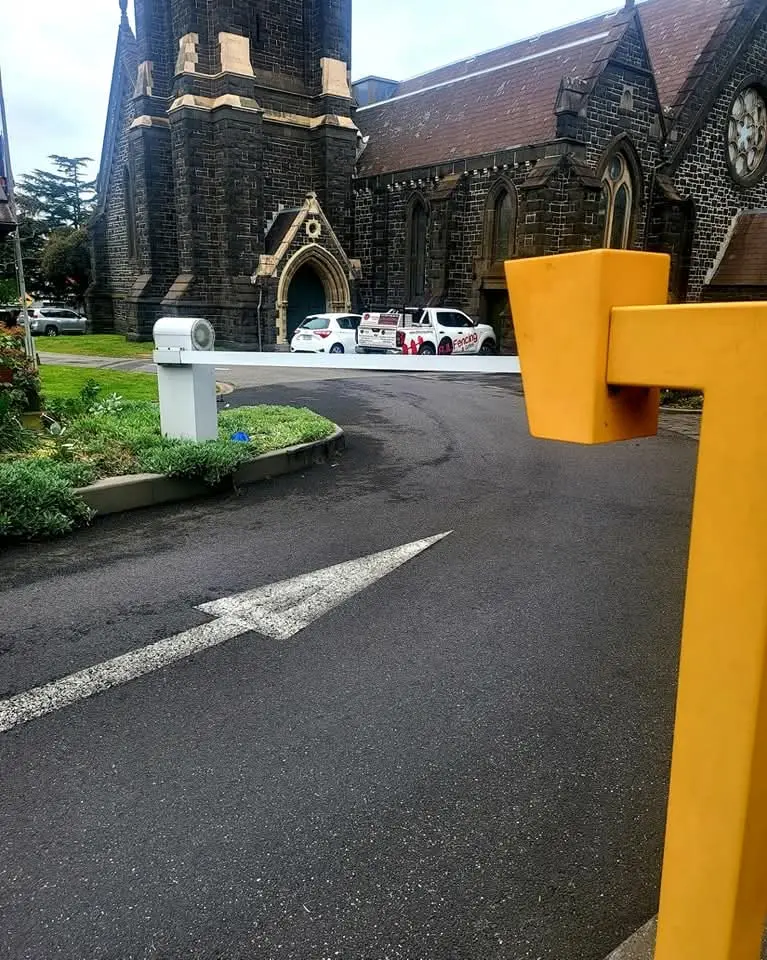 Toorak College: Boom gate & access control case study
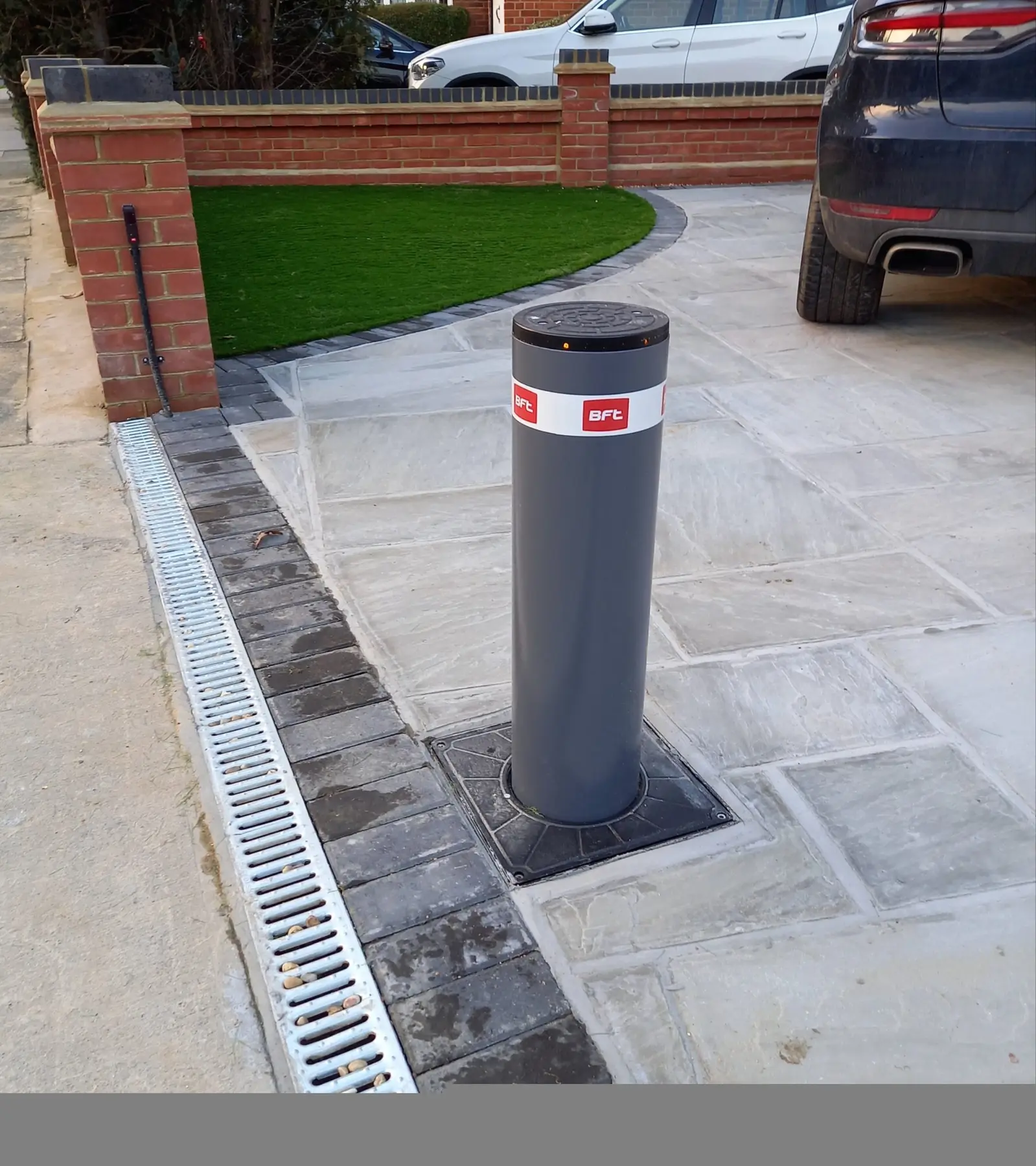 Automatic Bollard Installation: Automated vehicle control case study